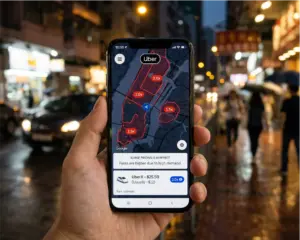
You’ve been there before. It’s late, it’s raining, and all you want to do is get home. You open the Uber app, plug in your destination, and then you see it — a fare that’s double, triple, or even more than what you were expecting. You’ve just been hit by Uber surge pricing. It’s a frustrating, often confusing experience that can make you feel like you’re being taken for a ride in more ways than one. But what if you could understand why it happens and, more importantly, how to outsmart it?
Surge pricing is one of the most controversial and misunderstood features of the Uber platform. While it may seem like a random penalty designed to drain your wallet, it’s actually a complex system driven by a core economic principle: supply and demand. It’s the digital equivalent of a market in action, constantly adjusting to the real-time needs of a city. This guide will pull back the curtain on Uber’s dynamic pricing model. We’ll deconstruct the algorithm, explore the triggers that cause fares to skyrocket, and provide you with practical, actionable tips to help you avoid the dreaded surge and save money on your next ride.

What Exactly Is Uber Surge Pricing?
At its core, Uber surge pricing is a dynamic pricing mechanism. This means the price of a ride is not fixed; instead, it changes in real-time based on the level of demand from riders and the availability of drivers. When there are more people requesting rides in a specific area than there are available drivers to fulfill them, the system automatically increases the price. This price increase is designed to do two things: temporarily reduce demand (as some riders may choose to wait or find alternative transportation) and, more crucially, incentivize more drivers to head to that high-demand area to pick up passengers.
Think of it like trying to buy tickets for a popular concert. As more people try to buy a limited number of seats, the price goes up. Similarly, when it starts pouring rain after a major football game, thousands of people will be opening their Uber app at the same time. Without surge pricing, there wouldn’t be nearly enough drivers to meet that sudden spike in demand, leaving many riders stranded. The higher fare acts as a signal to drivers across the city that their time and vehicle are urgently needed in that location. As more drivers arrive, the supply increases, and prices begin to fall back to normal. It’s a fundamental part of the rideshare market dynamics that keeps the network functioning, even during the busiest times.
The Anatomy of a Surge What Triggers Higher Fares?
Surge pricing isn’t random. It’s triggered by specific, often predictable, patterns of human behavior and external events. Understanding these triggers is the first step to anticipating and avoiding them. The algorithm is constantly monitoring the city, and when it detects a significant imbalance between rider requests and driver availability, the surge kicks in. This process is a core function of the advanced systems powering millions of daily rides. Here are the most common culprits behind those higher fares.
Predictable Peaks Rush Hour and Commutes
The most common trigger for surge pricing is the daily commute. In every major city, there are two predictable peaks of demand: the morning rush to work (typically 7:00 AM to 9:00 AM) and the evening rush home (4:00 PM to 7:00 PM). During these hours, a massive number of people are all trying to get a ride at the same time, creating a classic supply and demand imbalance. This is especially true in dense urban centers and business districts. If you’re trying to get a ride from a residential neighborhood to a downtown office at 8:30 AM, you’re competing with thousands of other commuters doing the same thing. This predictable daily pattern is a well-documented phenomenon in urban planning, as discussed by transportation research centers like the Federal Transit Administration.
The Unpredictable Spikes Weather and Events
While rush hour is predictable, other surge triggers can appear with little warning. Bad weather is one of the most powerful drivers of surge pricing. A sudden downpour, a snowstorm, or extreme heat can cause a massive, instantaneous spike in demand as people abandon walking, biking, or public transit in favor of a dry, comfortable car. At the same time, bad weather can reduce the number of drivers on the road, as some may choose to stay home rather than navigate treacherous conditions. This combination of soaring demand and shrinking supply is the perfect recipe for a major surge.
Major events are another classic trigger. Concerts, sporting events, festivals, and conferences all create concentrated pockets of high demand. When the event ends, thousands of attendees all try to leave at the same time, overwhelming the local supply of available drivers. This is why you’ll almost always see surge pricing around a stadium or concert venue right after the final whistle or encore. The same principle applies to nightlife, with a predictable surge happening around closing time for bars and clubs, typically between 1:00 AM and 3:00 AM on weekends.
Location, Location, Location Geographic Hotspots
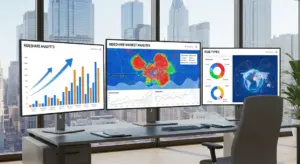
Surge pricing is highly localized. It doesn’t just happen city-wide; it happens in specific neighborhoods or even on specific blocks. Airports, major train stations, tourist attractions, and large entertainment districts are all common surge hotspots. The algorithm creates a digital map of the city, divided into a grid of smaller geographic areas. The price is calculated independently for each of these areas. This is why you can sometimes see a high surge in one neighborhood, while just a few blocks away, the prices are normal. This granular approach allows Uber to direct drivers with pinpoint accuracy to the exact locations where they are needed most, a key feature of the technology stack that revolutionizes urban transportation.
How to Outsmart the Surge Pro Tips for Riders
While surge pricing is an integral part of Uber’s model, it doesn’t mean you’re powerless. With a little bit of knowledge and strategic thinking, you can often avoid the highest fares and keep your transportation costs in check. It’s all about understanding the system and making it work for you, not against you. Here are some of the most effective strategies for outsmarting the surge.
The Power of Patience Wait It Out
One of the simplest yet most effective strategies is to simply wait. Surges are often dynamic and can be surprisingly short-lived. A sudden spike in demand might be caused by a train arriving at a station or a movie letting out. Once that initial wave of requests is met, prices can drop back to normal just as quickly as they rose. Instead of immediately accepting a high surge fare, try waiting 10 to 15 minutes, then close and reopen the app to check the price again. You’ll often find that the multiplier has decreased significantly or disappeared entirely. This tactic is widely recommended by consumer advice experts, such as those at Consumer Reports, who often advise patience when dealing with dynamic pricing.
Change Your Location Walk a Few Blocks
As we’ve discussed, surge pricing is highly localized. The red, high-demand zones on the Uber map have clear boundaries. If you’re on the edge of one of these zones, you can often save a significant amount of money by simply walking a few blocks away from the epicenter of the surge. Before you request your ride, zoom out on the map in the app to see where the surge is most intense. If you can, walk towards a lighter-colored or non-surge area. This small effort can often result in a much lower fare. This strategy takes advantage of the same geolocation technology that powers the entire Uber platform, a topic we explore in our article on how Uber’s app technology transformed daily life.
Plan Ahead Schedule Your Ride
For trips you know you’ll need to take during a predictable surge time — like an early morning ride to the airport — the “Schedule a Ride” feature is your best friend. This allows you to book your ride anywhere from 30 minutes to 30 days in advance. While it’s not a guarantee against any price increase (Uber notes that dynamic pricing may still apply), it often locks in a fare that is closer to the standard rate, protecting you from the highest peaks of a surge. By scheduling ahead, you’re giving the system time to find a driver for you in advance, which can help mitigate the real-time supply and demand crunch. You can learn more about how this feature works directly from Uber’s official help page.
Compare Your Options Check Other Apps
Uber isn’t the only game in town. If you’re facing a high surge, it’s always a good idea to check other rideshare apps like Lyft. While competitors use similar dynamic pricing models, their algorithms are different, and their supply and demand levels may not be the same at that exact moment. A surge on Uber might not be happening on Lyft, or it might be less severe. Taking 30 seconds to compare prices between apps can lead to significant savings. Tech news sites like The Verge frequently cover the competitive landscape of the rideshare industry, highlighting how this competition can benefit consumers.
The Other Side of the Coin The Driver’s Perspective
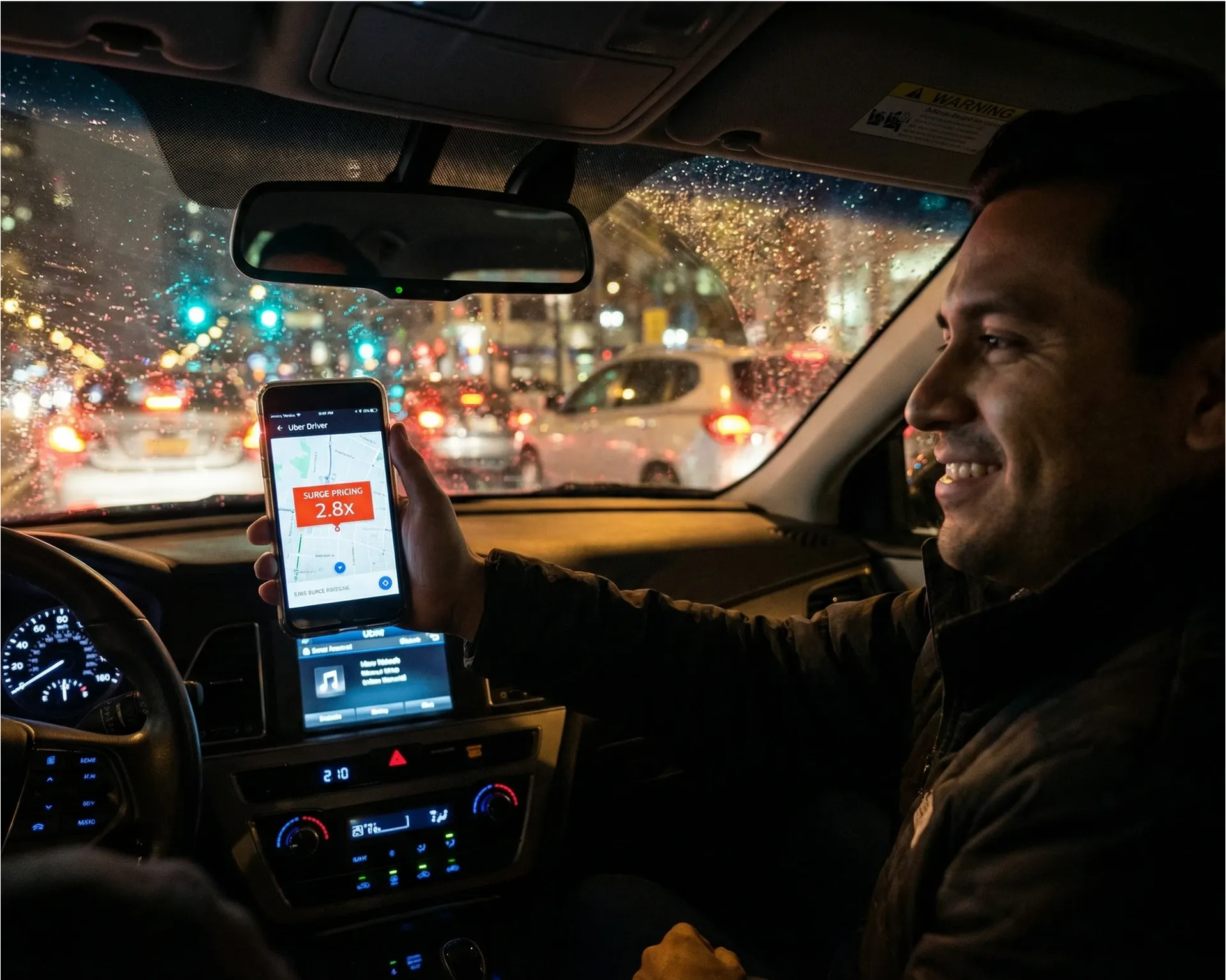
While riders often view surge pricing as a penalty, for drivers, it’s a powerful incentive. The higher fares are what motivate them to get on the road during inconvenient times or drive to areas with high demand. Without the promise of higher earnings, there would be far fewer drivers available during a rainstorm, late at night, or after a major event. This would lead to longer wait times and a less reliable service for everyone. From the driver’s perspective, surge pricing is not a windfall; it’s compensation for their time and effort in challenging conditions. It’s what makes it economically viable for them to be out on the road when most people would rather be at home.
This system is a core part of the gig economy model, designed to balance the needs of both riders and drivers. It ensures that there is a reliable supply of drivers to meet demand, even when that demand is unpredictable. The stories and experiences of drivers, which we explore in our article Inside the Ride, often highlight how crucial surge earnings can be to making a living as a rideshare driver. It’s a complex, often debated system, but it’s the engine that keeps the entire on-demand economy moving.
Conclusion Mastering the Price of a Ride
Uber surge pricing is a powerful and often frustrating force, but it’s not a mystery. It’s a direct reflection of the real-time pulse of a city, a finely tuned algorithm balancing the needs of riders who want a reliable ride with the needs of drivers who want fair compensation for their time. By understanding the triggers — from the daily commute to a sudden change in weather — you can begin to anticipate when a surge is likely to happen. And by using the strategies we’ve outlined, you can take control of your ride-hailing experience, making informed decisions that can save you money.
The next time you see that surge notification pop up, don’t just accept it as an unavoidable fate. Take a moment to assess the situation. Can you wait a few minutes? Can you walk a block or two? Have you checked other options? By deconstructing the system and learning how to navigate it, you can turn a moment of frustration into an opportunity for a smarter, more affordable ride. The power, as it turns out, is in your hands.