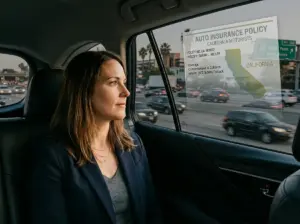
If you ride Uber regularly in California, a quiet legal change that took effect on January 1, 2026 has fundamentally rewritten how much financial protection you have if something goes wrong during your trip. California SB 371 reduced the uninsured and underinsured motorist coverage that rideshare companies are required to carry for passengers by 94 percent — from $1 million per incident down to just $60,000 per person and $300,000 per incident. Most California riders have no idea this happened. Here is what the law actually changed, what it did not change, and what you can do to protect yourself in 2026.
What Is California SB 371?
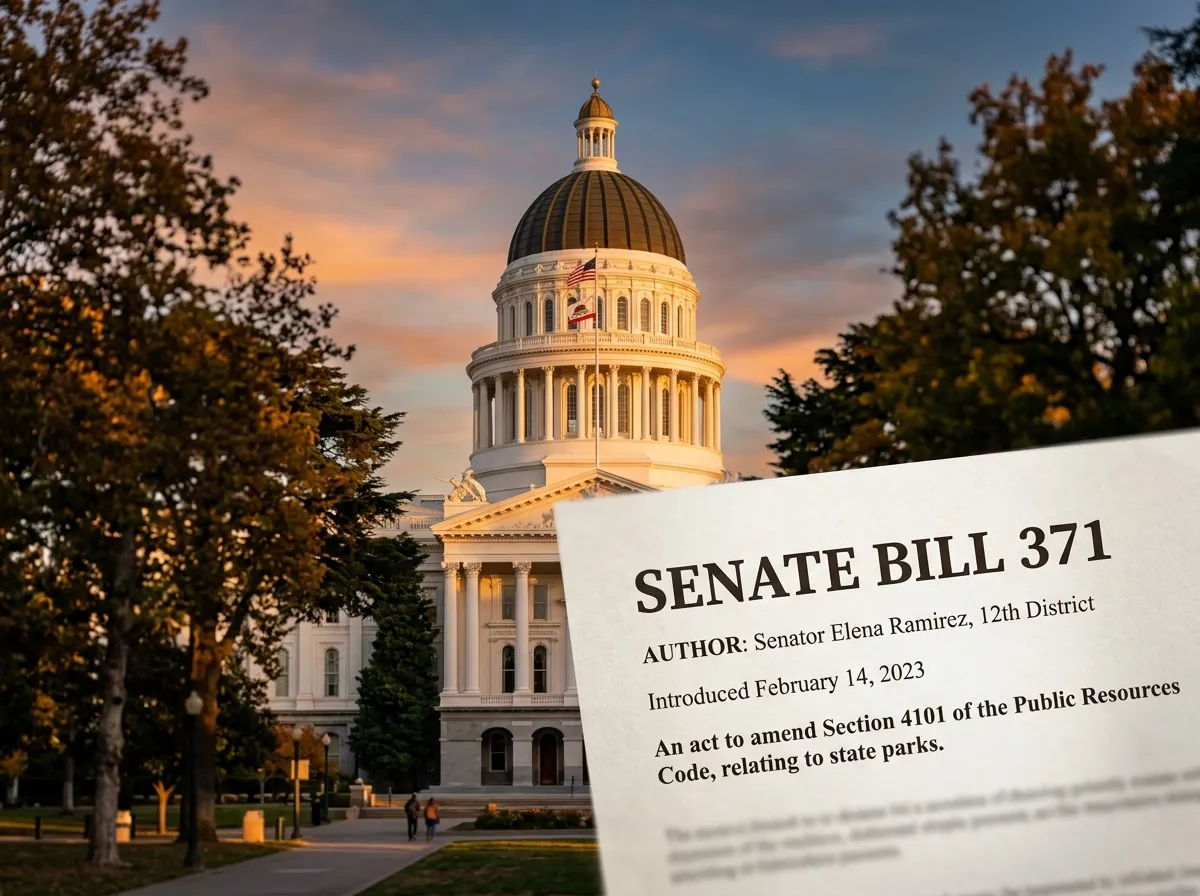
Senate Bill 371, authored by State Senator Christopher Cabaldon, was signed into law by Governor Gavin Newsom on October 3, 2025 and took effect on January 1, 2026. The bill amends California’s Public Utilities Code to overhaul the insurance requirements that apply to transportation network companies — the official legal category that includes Uber and Lyft.
The headline change is simple. Before SB 371, California required rideshare companies to maintain $1 million in uninsured and underinsured motorist coverage from the moment a passenger entered the vehicle until the moment they exited. Under the new law, that requirement drops to $60,000 per person and $300,000 per incident — a roughly 94 percent reduction in per-person coverage.
The Compromise Behind the Bill
SB 371 did not move through the legislature in isolation. It was paired with Assembly Bill 1340, which gives rideshare drivers the right to unionize and collectively bargain while remaining independent contractors under California’s Proposition 22 framework. The two bills represent a negotiated compromise between Uber, Lyft, SEIU California, and the Newsom administration.
Lawmakers argued that the old $1 million UM/UIM mandate was set more than a decade ago when the rideshare industry was new, and that real-world claims data shows the requirement is higher than necessary. Proponents say the savings will lead to lower fares for riders and higher take-home pay for drivers. Critics — particularly personal injury attorneys — argue the change leaves seriously injured passengers with a coverage gap that can be wiped out by a single emergency room visit.
What SB 371 Did Not Change
Before panic sets in, it is worth being precise about what stayed the same. The $1 million third-party liability policy that applies when the Uber driver is at fault for an accident is still fully intact. If your driver runs a red light, gets distracted, or otherwise causes the crash, the same $1 million coverage that existed before 2026 still applies.
The reduction only affects situations where a third-party driver — meaning someone outside the Uber — causes the crash and either has no insurance or carries policy limits that are too low to cover the injuries. That is the specific scenario where SB 371 cut coverage from $1 million down to $60,000.
Why That Distinction Matters
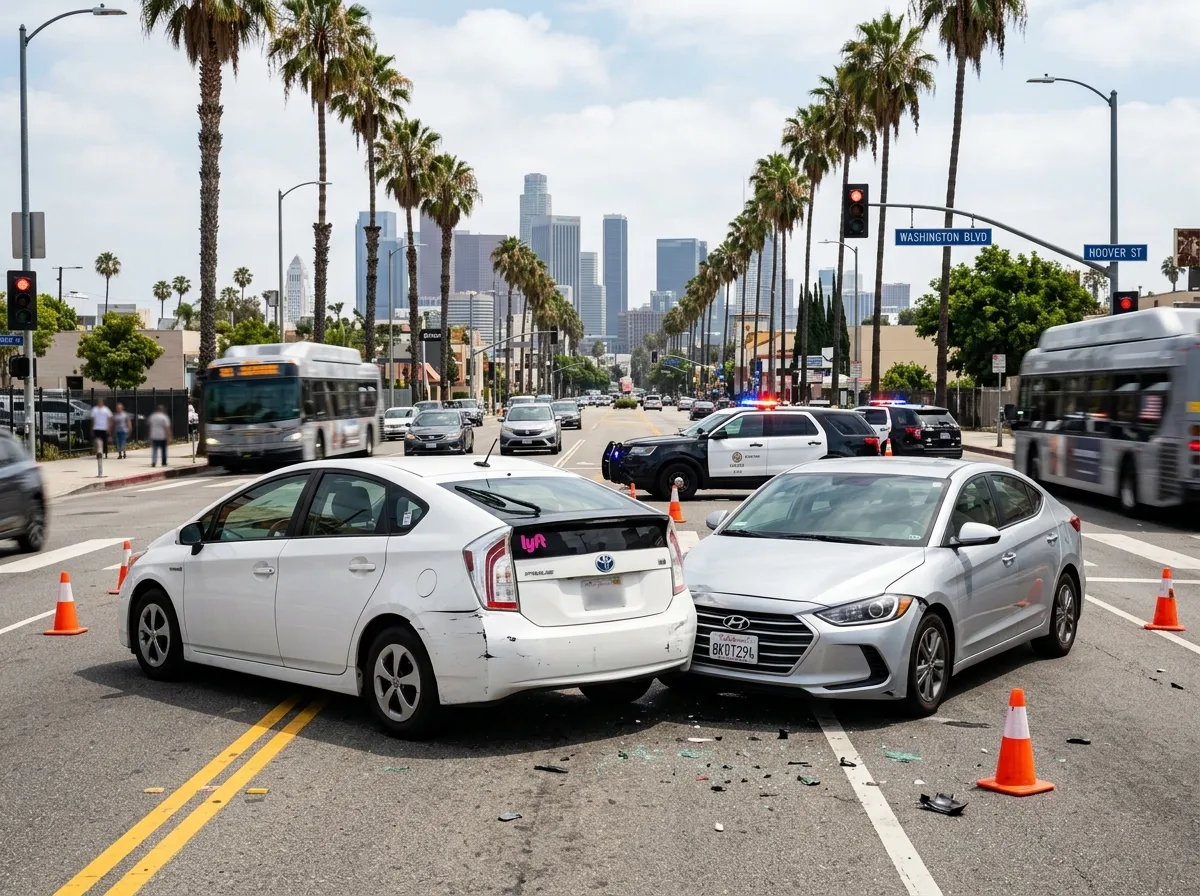
It matters more than it might sound. According to data referenced in the California Legislative Information portal, roughly one in six drivers in heavily congested parts of Southern California operates without adequate insurance. That means the exact scenario SB 371 affects — getting hit by an uninsured or underinsured driver while riding in an Uber — is far from rare. It is one of the more common ways serious rideshare injuries actually happen.
How the Three Insurance Periods Still Work
California rideshare insurance is structured around three periods that describe what the driver is doing at the moment of a crash. SB 371 left the period framework intact and only adjusted the dollar amounts attached to the UM/UIM portion of Period 3.
Period 1: App On, No Ride Accepted
The driver is logged into the app but has not yet accepted a request. Coverage during this window is limited — typically $50,000 per person, $100,000 per accident in liability coverage, and minimal UM/UIM protection.
Period 2: En Route to Pickup
The driver has accepted a ride request and is driving to pick up the passenger. The full $1 million liability policy applies during this window.
Period 3: Passenger in the Vehicle
The passenger is in the car. The $1 million liability policy still applies if the Uber driver is at fault. But the UM/UIM coverage that protects passengers when an uninsured outside driver causes the crash is now capped at $60,000 per person and $300,000 per incident.
What This Means for California Uber Riders
For most everyday trips — to the airport, to a meeting, home from a night out — the change will never affect you. Most Uber rides end without incident, and most accidents that do happen are minor. The change matters in one specific scenario: a serious crash caused by a third-party driver who lacks adequate insurance.
In that scenario, $60,000 can disappear quickly. A single ambulance ride and emergency room stabilization can run $5,000 to $12,000. An MRI or CT scan adds another $3,000 to $7,000. A short hospital stay, surgery, and follow-up rehab can push a moderate-injury bill well past $50,000 before lost wages and pain and suffering even enter the equation.
How to Protect Yourself in 2026
The most important step every California rider can take is to review their own personal auto insurance policy. If you own a car, the UM/UIM coverage on your own policy can typically extend to protect you while you are a passenger in someone else’s vehicle, including an Uber. Many drivers carry only the state minimum, which leaves the same gap. Increasing your own UM/UIM limits to $250,000 or higher is one of the cheapest forms of insurance available and now does meaningful work that Uber’s policy used to do.
If you do not own a car, consider asking your health insurance provider about coverage for accident-related injuries, and confirm whether Uber’s optional rider safety features are enabled in your app. None of this replaces the lost $940,000 of coverage, but layered protection is the most realistic response to the new legal landscape.

The Bigger Picture: A Shifting Rideshare Landscape
SB 371 is one piece of a larger transformation reshaping California rideshare in 2026. A separate ballot initiative — sometimes called the Common Carrier Initiative — is currently in the signature-gathering phase and would classify Uber and Lyft as common carriers, the same legal category as airlines and buses. If it qualifies for the November 2026 ballot and passes, it would partially restore passenger protections by allowing victims to pursue Uber’s corporate assets directly, bypassing the reduced insurance limits.
That uncertainty is part of why understanding SB 371 right now matters. The law is in effect today. Whether the political pendulum swings back toward stronger passenger protections is a question voters will likely answer in November. For a deeper look at how California’s evolving rules connect to broader industry shifts, see our analysis of the strategic moves shaping Uber’s future.
The Bottom Line
California SB 371 did not eliminate Uber insurance. It did not strip away the $1 million liability coverage that applies when your Uber driver is at fault. What it did was significantly reduce the safety net that protects passengers when someone else on the road — an uninsured or underinsured third party — causes a serious crash. For California riders, that means the most important insurance policy in 2026 may no longer be Uber’s. It may be your own.
The smartest move you can make this year takes about 15 minutes: open your personal auto policy, find the UM/UIM line, and ask your agent whether your limits would cover a serious injury in 2026 dollars. If the answer is no, raise them. The law has changed. Your protection should change with it.