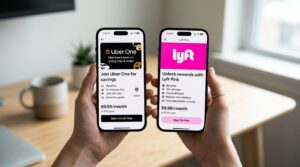
If you ride rideshare more than a handful of times per month, you have probably wondered whether one of the $9.99 subscription memberships is actually worth the recurring fee. Uber One vs Lyft Pink is the question every frequent rider eventually asks, and in 2026 the answer is more nuanced than it has ever been. Both plans cost the same and both promise meaningful savings, but they save you money in completely different ways. Here is the full breakdown of which subscription pays off faster, who each plan is best for, and the surprisingly simple math that determines whether either one is worth your $120 per year.
The 2026 Price Tag: Identical, but the Value Is Not
Uber One and Lyft Pink both cost $9.99 per month, or roughly $99 to $99.99 annually if you pay upfront. On paper that makes the choice look easy — pick whichever you ride more often. In practice, the perks underneath that identical price tag have diverged sharply in 2026, and they reward very different rider behaviors.
What Uber One Includes
Uber One bundles rides and Uber Eats into a single membership. The core benefits include a 5 percent to 6 percent discount on eligible UberX, Uber Comfort, and other ride types, $0 delivery fees on Uber Eats orders over $15, up to 10 percent off select Uber Eats orders, priority support, and member-only promotions. The savings stack across two services, which is why Uber One pays for itself fastest for riders who also order food delivery regularly.
What Lyft Pink Includes
Lyft Pink takes a different approach. The base plan includes a 5 percent discount on eligible rides, up to three relaxed cancellations per month, priority airport pickup at major hubs, and free access to Price Lock — a feature that caps fares on frequent routes during surge events. According to CX Dive’s October 2025 coverage, Lyft also offers a Lyft Pink All Access tier at $199 per year that adds a 10 percent discount on premium rides and bikeshare benefits.
The Real Break-Even Math
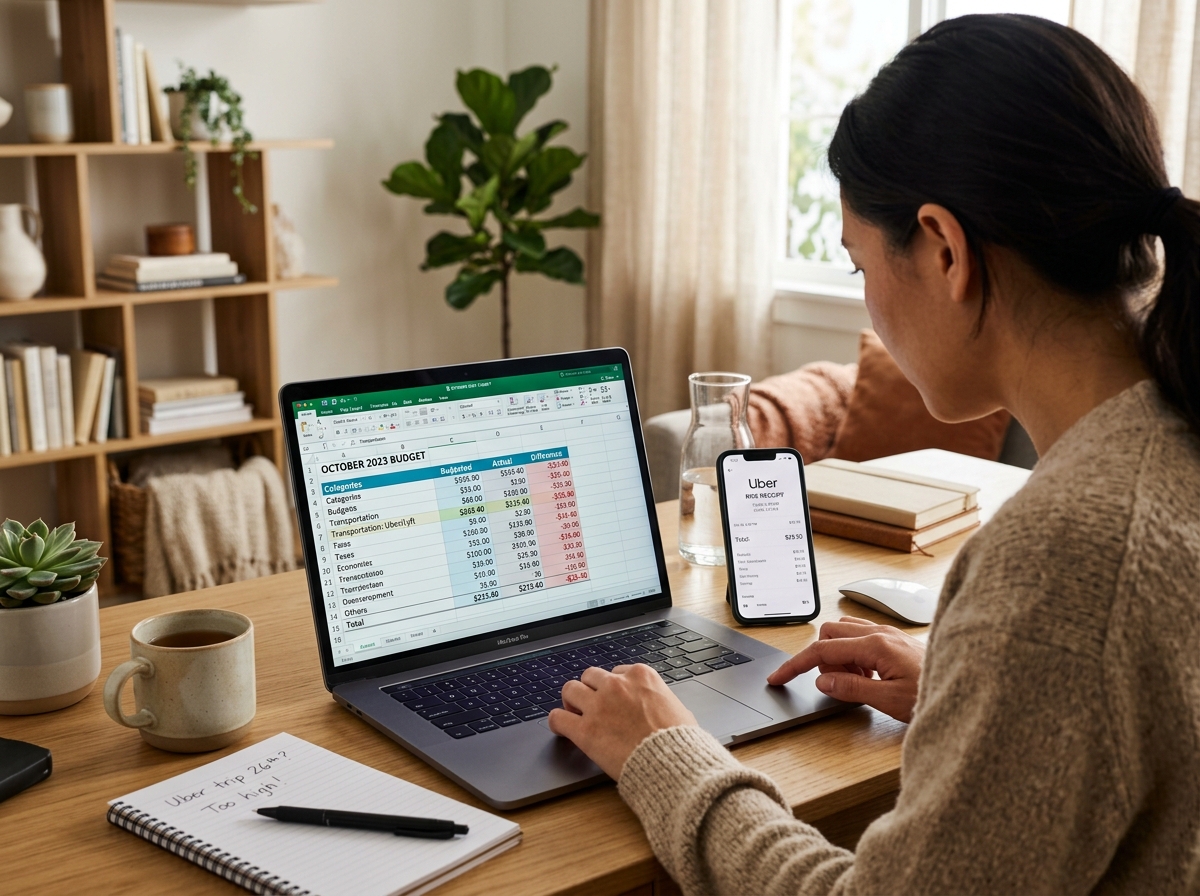
The most important question is not which membership has more perks — it is when each one starts saving you actual money. Here is the math that matters.
Uber One Break-Even
If you only use Uber for rides, you need roughly 10 to 14 rides per month at an average fare of $15 to $20 to break even on the 5 percent discount alone. If you also order Uber Eats two or more times per month, the $0 delivery fee perk alone usually covers the entire $9.99 monthly fee. That cross-service stacking is Uber One’s biggest advantage.
Lyft Pink Break-Even
For ride-only users, Lyft Pink reaches break-even faster because of Price Lock. A single surge avoidance during a busy commute or post-event ride can save $15 to $25, which alone can cover three to four months of the subscription fee. For frequent commuters on the same route, Price Lock is genuinely powerful in 2026 because it caps your fare regardless of surge pricing.
Who Wins for Different Rider Types
The cleanest way to choose is to match the subscription to how you actually use rideshare in 2026.
The Multi-Service User
If you take Uber rides and order Uber Eats regularly, Uber One is the obvious winner. The combined savings across both services typically exceeds the subscription fee even at moderate usage. A few delivery orders per month plus a handful of rides routinely deliver net savings of $20 to $40 per month.
The Daily Commuter
If you ride the same route most days and surge pricing hits that route frequently, Lyft Pink with Price Lock is the better deal. A commuter avoiding even one $20 surge event per week could save $80 per month — roughly eight times the subscription cost. This is the strongest single use case for Lyft Pink in 2026.
The Occasional Rider
If you take fewer than 8 to 10 rides per month and rarely order delivery, neither subscription is worth it. The flat monthly fee will almost always exceed the cumulative discount. Better strategy: compare both apps before every ride and pay per trip.
The California Rider
California-specific factors tilt the math slightly. With LAX recently raising its rideshare fees to as much as $12 per trip, both subscriptions deliver less effective savings on airport trips. However, San Francisco and Los Angeles also have some of the highest surge events in the country, which makes Lyft Pink’s Price Lock especially valuable. For more on how California’s airports affect rideshare pricing, see our breakdown of Uber at LAX, SFO, and SAN.
Where Each Subscription Falls Short
Both plans have limitations worth knowing before you sign up.
Uber One Limitations
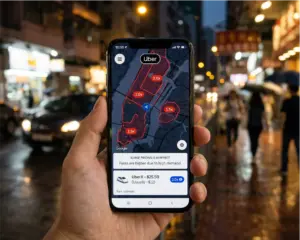
The 5 to 6 percent ride discount does not apply to UberX Share or rides booked more than 30 minutes in advance through some scheduling tools. The Uber Eats free delivery perk only applies to participating restaurants with the gold Uber One icon, which excludes some smaller local merchants. And the discount applies to surged fares, but it does not block the surge itself — meaning a 2x surge ride still costs roughly twice as much, just with a small discount applied.
Lyft Pink Limitations
The 5 percent ride discount on Lyft Pink only applies to personal rides — business profile rides are excluded. Price Lock is limited to a set number of routes per account and a $50 monthly savings cap, after which standard pricing resumes. And driver supply on Lyft can be thinner than Uber in some California suburbs and late-night markets, which can offset some of the savings.
The Smartest Subscription Strategy in 2026
One pattern that has become increasingly popular among heavy rideshare users in 2026 is subscribing to both. At $19.98 per month combined, heavy commuters who take 15 or more rides per month across both platforms can save a net $25 to $40 per month after factoring in the Price Lock savings, food delivery discounts, and surge avoidance. The key is to actually use the comparison habit — open both apps before every ride and book whichever one is cheaper after applying your membership discount.
Dual-Subscription Tactics
If you go this route, use Lyft Pink’s Price Lock on your most predictable surge-prone route (typically a commute or recurring airport run), and use Uber One for delivery and general flexibility. Compare both apps before every booking, and treat brand loyalty as the enemy of savings.
The “Just Compare Apps” Alternative
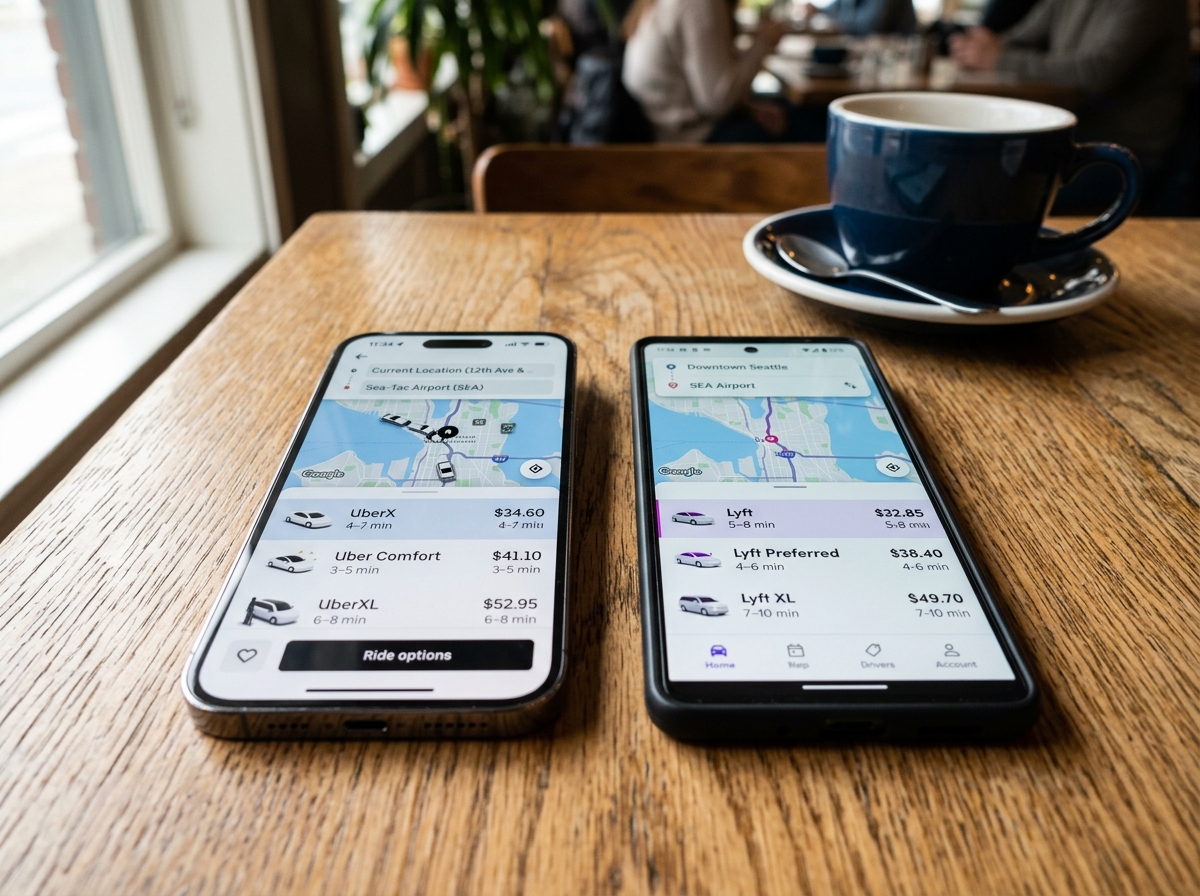
For riders who do not want to manage subscriptions at all, simply comparing both apps before every ride often delivers comparable savings without the recurring fee. According to a January 2026 Johns Hopkins Carey Business School study, only 16 percent of riders compare both apps before booking, and those who do save an average of $4 to $8 per ride. For deeper surge-avoidance strategy, see our breakdown of how Uber’s surge pricing model works and our 5 ways to save money on Uber rides.
The Bottom Line: Which Subscription Wins in 2026?
Both Uber One and Lyft Pink can save you real money in 2026, but they are not interchangeable. Uber One wins for multi-service users who combine rides with regular Uber Eats orders. Lyft Pink wins for daily commuters on surge-prone routes who can benefit from Price Lock. Casual riders should skip both and pay per trip. Heavy users should consider running both subscriptions and letting their needs at any given moment decide which app they open.
The $9.99 monthly fee is the same on either side. What changes is your relationship to rideshare itself — whether you eat delivery, where you commute, how often surge hits your route, and how disciplined you are about comparing prices. Answer those four questions honestly, and the right subscription chooses itself.